


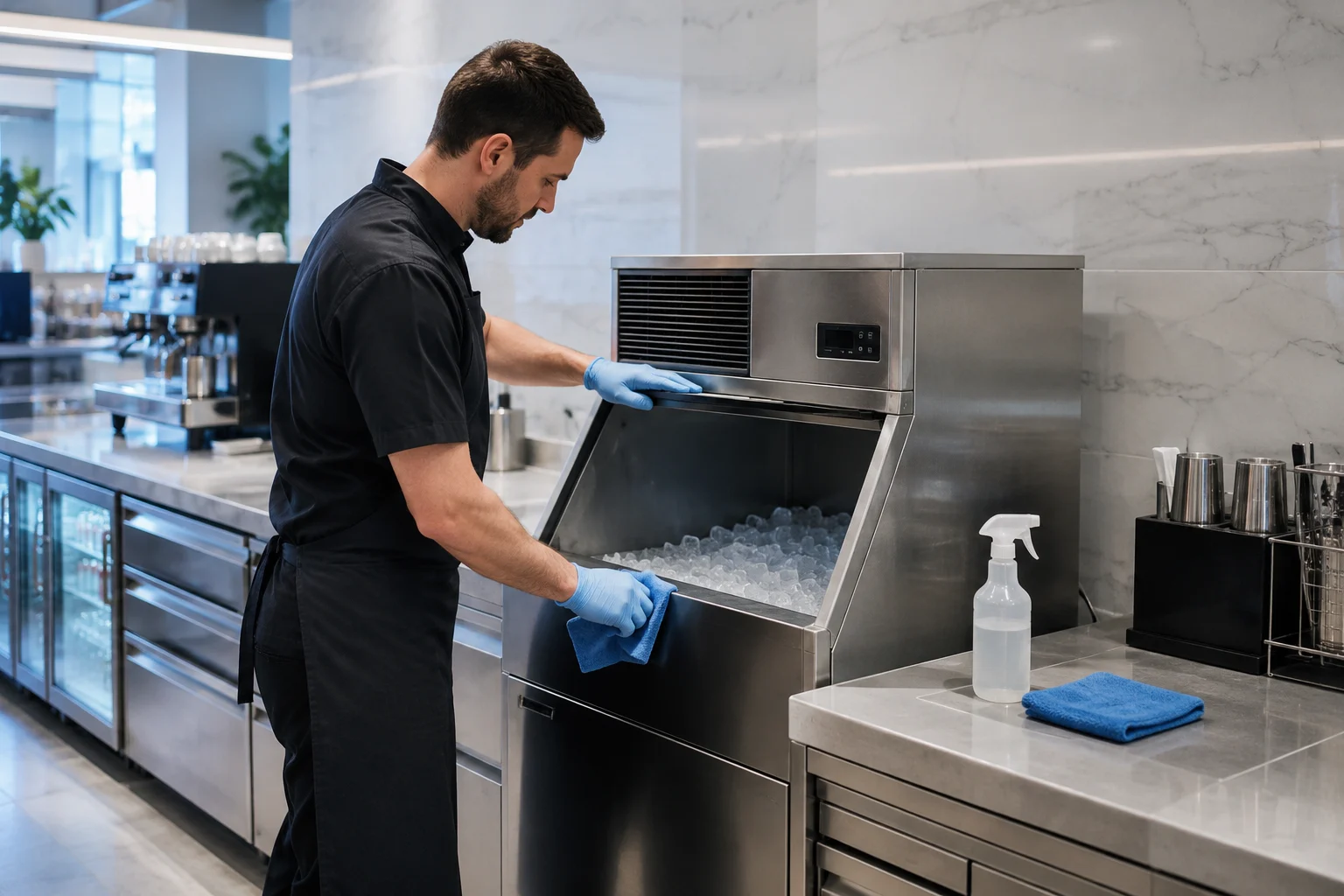
Ice is one of the few things in a commercial kitchen or bar that customers consume directly, often without thinking about where it came from. A neglected ice machine can become a source of bacteria, mould and mineral buildup, and most operators only discover this when a customer complains or an inspection raises a flag. This guide sets out what proper ice machine hygiene involves, based on the servicing process used across Australian commercial ice machines.
Why Ice Machine Hygiene Matters
A poorly maintained ice machine creates two separate problems. The first is operational: scale and mineral buildup reduce ice output and can lead to breakdowns. The second is a food safety issue: bacteria and mould can grow inside a machine that is not cleaned and sanitised on a regular schedule, and that risk transfers directly into the ice served to customers.
Regular servicing addresses both problems at once. It prevents breakdowns and downtime, keeps ice clean and safe by eliminating bacteria, mould and mineral buildup, improves energy efficiency, extends the life of the machine, and helps a business meet food safety standards and comply with health regulations.
What Regular Servicing Involves
A proper service is not the same as wiping down the exterior of the machine. A complete service covers:
- Thorough cleaning and sanitisation to eliminate contaminants such as mould, bacteria and mineral buildup.
- Filter replacement, so only filtered water enters the machine going forward.
- A full system inspection, to catch minor issues before they turn into costly repairs.
- Condenser and coil cleaning, to prevent the unit from overheating.
- Drain and water line flushing, to clear blockages that affect performance.
- Cooling system maintenance, to keep the refrigeration components running as intended.
The Cleaning Process, Step by Step
A standard professional ice machine clean generally follows this sequence:
- Safety and preparation. The machine is turned off, disconnected from power, and the water supply is shut off before any cleaning begins.
- Removing and cleaning internal components. The ice bin is emptied completely, and removable parts such as the water curtain, ice scoop and filters are taken out for detailed cleaning.
- Inspecting for issues. Hoses, valves and pumps are checked for scale buildup, blockages or leaks.
- Cleaning and sanitising the machine. A manufacturer-approved cleaner is used, a deep cleaning cycle is run, and interior surfaces are disinfected with a food-safe sanitiser.
- Condenser and air filter maintenance. Dust and debris are removed from the condenser coils, and air filters are cleaned and dried before being reinstalled.
- Reassembling and testing. All components are reinstalled, and the machine is run through several test cycles. The first batch of ice produced is discarded to make sure what follows meets quality standards.
- Final inspection and planning. Ice formation is checked, and the next service date is scheduled so the machine does not go too long between cleans.
How Often Should a Commercial Ice Machine Be Serviced
Online Ice Machines recommends servicing a commercial ice machine at least twice a year, with busier operations scheduling a service every three to six months. A business running a machine at high volume, such as a busy bar or a seafood display counter, will generally need to service closer to the three-month mark than the six-month mark.
Can a Business Clean the Machine Itself?
Basic, regular cleaning can be carried out by staff between professional services. However, professional cleaning reaches a deeper level of sanitisation than a basic wipe-down, since it includes dismantling internal components, inspecting for scale and using manufacturer-approved cleaning products. Relying on staff cleaning alone, without a scheduled professional service, leaves gaps that can affect both ice quality and machine lifespan.
Who Needs to Take This Seriously
Ice machine hygiene is not only a concern for large hotels. Online Ice Machines provides servicing support across a wide range of business types, including cafés and restaurants, bars and clubs, hotels and resorts, supermarkets and convenience stores, healthcare and aged care facilities, and food processing and catering businesses. Any business serving ice directly to the public, or using it in food and drink preparation, has the same underlying hygiene obligation.
Frequently Asked Questions
Q. How often should a commercial ice machine be serviced?
Ans: At least twice a year, with busier businesses scheduling a service every three to six months to keep up with higher usage.
Q. What does a professional ice machine service include?
Ans: A full service includes cleaning and sanitising internal components, filter replacement, inspection for scale and leaks, condenser and coil cleaning, and drain and water line flushing, finishing with test cycles to confirm the machine is producing clean ice correctly.
Q. Can I clean my ice machine myself between services?
Ans: Basic cleaning can be done by staff, but it does not replace a professional service. A professional clean reaches components and surfaces that a basic wipe-down does not, and uses manufacturer-approved sanitising products.
Q. What happens if an ice machine is not serviced regularly?
Ans: Without regular servicing, scale and mineral buildup reduce ice output, energy use rises, and bacteria or mould can develop inside the machine, creating a direct food safety risk for any business serving that ice to customers.